Children and Teen Mental Health, ADHD & Autism
Kassandra Smalley
MACP, Registered Psychotherapist (Qualifying), BASc, CYC
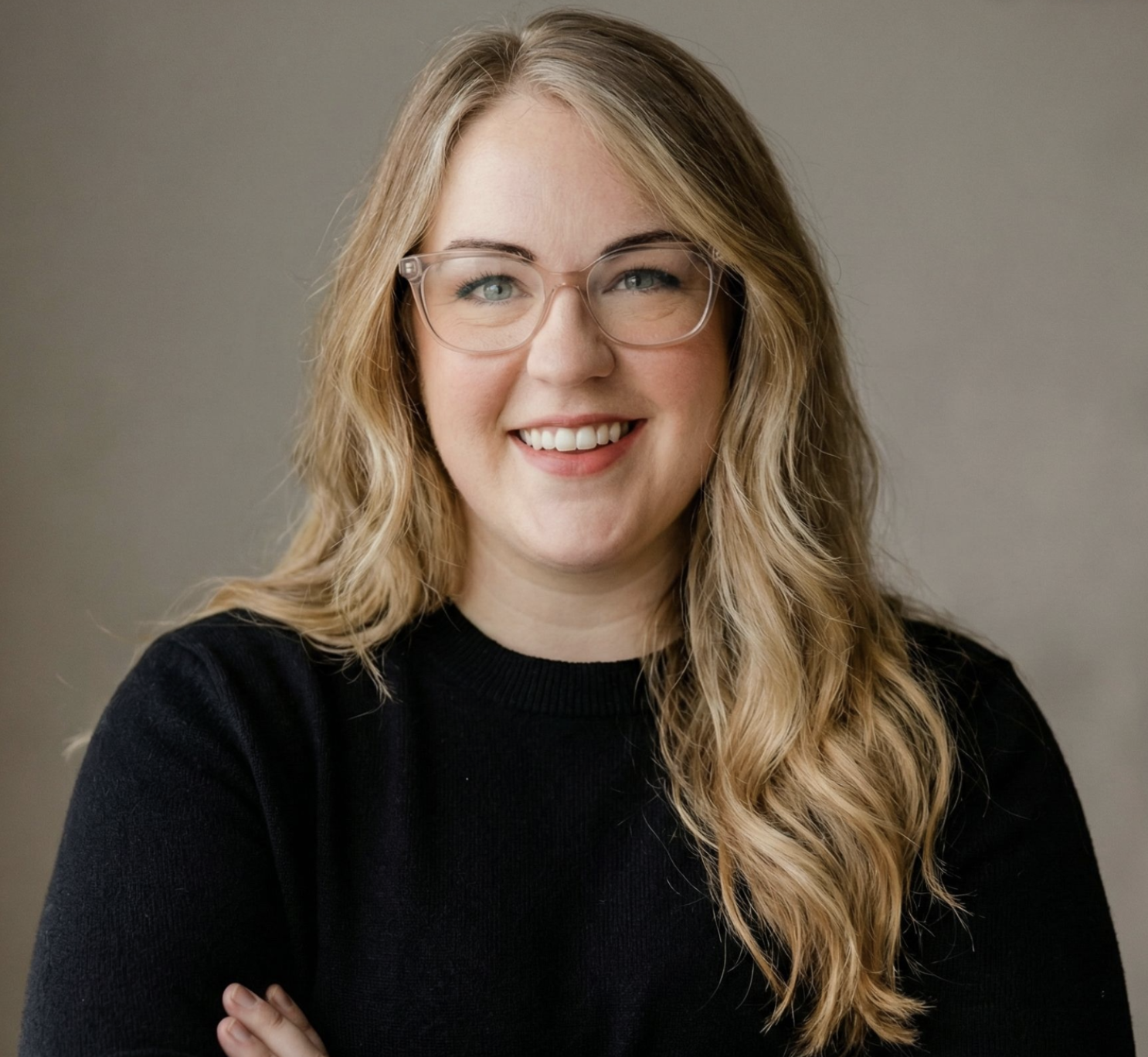
You’ve been holding a lot for a long time. You might feel stuck in patterns you don’t fully understand, even when you’re trying to do things differently.
Maybe you feel overwhelmed, anxious, or stuck in patterns that are hard to break, especially in your relationships, your family, or how you see yourself. You might notice that certain reactions or emotions feel bigger than the situation, and you’re not always sure why.
For some, this shows up in parenting, trying to support your child while managing your own stress, self-doubt, or emotional load. For others, it shows up in people-pleasing, difficulty with closeness, or feeling disconnected from yourself.
I support adults navigating anxiety, relationship patterns, and life transitions, with a focus on maternal mental health and neurodivergent individuals, including ADHD and autism.
My approach is attachment-informed and trauma-aware, focused on helping you better understand long-standing patterns and build more supportive ways of relating to yourself and others.
A core theme in my work is understanding how early experiences shape how we relate to ourselves and others.
This often shows up as:
Anxiety, overwhelm, and self-doubt
People-pleasing and difficulty with boundaries
Relationship patterns and attachment-related concerns
Maternal mental health, including pregnancy, postpartum, and early parenthood
Navigating neurodivergence in an affirming and supportive way
Therapy with me is collaborative, paced, and responsive. I value emotional safety, reflection, and developing insight that can be applied meaningfully to everyday life.
At its core, my work is about creating space, space to slow down, make sense of your experiences, and move forward with greater clarity and self-trust, especially during times of stress, transition, or change.
Neurodiversity-affirming support
I take a neurodiversity-affirming approach and support neurodivergent individuals, including adults with ADHD and autism.
Over the past decade, I’ve worked across a range of settings supporting neurodivergent individuals, and this remains an important focus of my training and development.
Many of the people I work with have spent years adapting or masking in environments that weren’t designed with their needs in mind, which can be exhausting over time.
My approach is individualized and focused on reducing stress, building self-understanding, and supporting more authentic ways of relating, rather than trying to change who someone is.
Understanding patterns and relationships
A big part of my work is helping adults make sense of patterns that feel hard to break.
Much of my background has been working with children, youth, and families, which has given me a strong understanding of how early emotional environments and relationships can shape the way we relate to ourselves and others over time.
You might notice this showing up in relationships, in how you respond to stress, or in the way you see yourself. Sometimes these patterns can feel automatic, like you’re reacting before you have a chance to pause or understand why.
Together, we slow things down and begin to make sense of where these patterns come from and how they continue to show up in the present.
From there, we focus on building more supportive and intentional ways of relating, both to yourself and to others.
Working with children and families
While much of my work at Watkins focuses on adults and caregivers, I also work with children and teens, particularly those with ADHD, autism, or other developmental differences.
Many of the children I support are navigating big emotions, anxiety, social challenges, or confidence concerns. Our work focuses on helping them better understand what’s happening in their bodies and build skills in a way that actually works for them.
Working with parents and caregivers is an important part of this process. Supporting families in feeling more connected, improving communication, and responding to challenges in more supportive ways is often just as important as working directly with the child.
You Might Be Here If…
A space for different stages of life, identities, and experience
I work with individuals of all ages, especially those with ADHD, autism, or other developmental differences. A lot of the children I work with are dealing with big emotions, anxiety, social challenges, or confidence issues, and we focus on helping them understand what’s going on in their bodies and build skills in a way that actually works for them.
Working with parents and caregivers is a big part of what I do. Supporting families in feeling more connected, improving communication, and responding to challenges more supportively is often just as important as working with the child.
A core theme in my work is understanding how early experiences shape us. This shows up in supporting older teens and adults who are unpacking childhood emotional wounds and attachment patterns, as well as in maternal mental health work, where pregnancy, postpartum, and early parenting are understood within the context of the family system and a parent’s own early experiences.
-
I integrate a range of evidence-informed modalities depending on your needs, including:
Attachment-Based Therapy
Family Systems Therapy
Emotionally Focused Family Therapy (EFFT)
Dialectical Behaviour Therapy (DBT)
Cognitive Behavioural Therapy (CBT)
Trauma-Informed Therapy
Strength-Based Therapy
Person-Centred Therapy
Solution-Focused Brief Therapy (SFBT)
Acceptance and Commitment Therapy (ACT)
Mindfulness-Based Therapy (MBCT / mindfulness-based approaches)
Motivational Interviewing
Humanistic Therapy
Culturally Sensitive Therapy
Internal Family Systems (IFS)
-
Master of Arts in Counselling Psychology
Yorkville University — 2025
Bachelor of Applied Science in Family and Community Social Services
University of Guelph — 2023
Social Service Worker Diploma
Humber College — 2023
Child and Youth Care Advanced Diploma
Seneca College — 2020
-
Trauma, Attachment & Parts Work
Training focused on trauma-informed and attachment-based psychotherapy.
Targeting Attachment Wounds | Personal Transformation Institute | Tyler Orr | 2026. 2 hours
Deciphering Dissociation: Understanding and Screening for Dissociation | Personal Transformation Institute | Laura Mullis, LCSW, CAADC | 2026. 2 hours
Treating Adult Children of Personality Disordered Parents: From Assessment to Treatment Strategies | Envision | Dr. Daniel Fox | 2026. 5 hours
An Attachment Focused Approach to Trauma and Loss | NICABM | George Faller & Leanne Campbell | 2026. 3 hours
2-Day Intensive Trauma Treatment Certification Workshop | PESI | Arielle Schwartz, PhD | 2025. 12.5 hours
Getting Creative with Parts | PESI | Lisa Ferentz, LCSW-C | 2025. 4 hours
Emotionally Immature Parents and the Impact on Adult Children | Leading Edge Seminars | Dr. Lindsay Gibson | 2025. 3 hours
Trauma-Focused School Counseling | Mental Health Academy | Dr. Mark Brackett | 2025. 1 hour
Polyvagal Meets Attachment-Centered Play Therapy | PESI | Dr. Stephen Porges & Clair Mellenthin | 2025. 1.5 hours
Suicide Risk, Self-Harm & Crisis Assessment
Training related to suicide prevention, risk assessment, and crisis support.
Foundations of Risk Assessment & Crisis Conversations in Clinical Practice: Level 1 | Finding Solutions | Alexandra Myers | 2026. 1.5 hours.
Self-harm in Teenagers: The Spectrum from Nonsuicidal Self-Injury to Suicidality | SickKids CCMH Learning Institute | Marshall Korenblum, MD, FRCP©, Dip. Child Psych. | 2026. 6 hours
Understanding Youth Suicide Risk | Mental Health Academy | Dr. Jonathan Singer | 2025. 1 hour
Columbia Suicide Severity Rating Scale (C-SSRS) | Columbia Lighthouse Project | Kelly Posner, PhD | 2025.
Applied Suicide Intervention Skills Training (ASIST)
LivingWorks | 2018.
Neurodiversity & Neuro-Affirming Care
Training related to supporting neurodivergent clients, including ADHD and autism.
Neurodiversity in Women: Therapeutic Strategies for Empowering Women with Autism or ADHD | PESI | Jennifer Gerlach, LCSW | 2026. 4 hours
Affirming Play Therapy Approaches – The Agent of Change for Neurodivergent Kids | PESI | Robert Jason Grant, EdD | 2026. 1.5 hours
Neurodiversity Fundamentals | Mental Health Academy | Elaine Taylor-Klaus | 2025. 1 hour
Neurodiversity & Neuro-Affirming Counseling | Mental Health Academy | Dr. Emily Goodman-Scott | 2025. 1 hour
Autistic Children and Youth: Effective & Affirming Care | Leading Edge Seminars | Katy Albert, MEd | 2025. 6 hours
Child & Adolescent Mental Health
Training related to supporting children and adolescents.
Empowering Children Facing Cultural Trauma: Play Therapy Approaches to Build Resilience | PESI | Carmen Jimenez Pride & Catherine Denham | 2026. 2 hours
DBT for Adolescents (DBT-A) – Level 2 Accreditation | Association for Psychological Therapies (APT) | Online Modules | 2025. 18 hours
Adolescent Substance Use | Mental Health Academy | Dr. Amanda Giordano | 2025. 1 hour
The Purposeful Use of Daily Life Events (DLE)
TransformAction Consultation & Training | 2019.
Therapeutic Modalities & Clinical Skills
Training in psychotherapy approaches and clinical interventions.
Recognizing and Treating Generalized Anxiety Disorder | Live Webinar CE Provider | Dr. Mia Nunez | 2026. 2 hours
Solution Focused Brief Therapy Certification – Level 1 | PESI | Elliott Connie, MA | 2025. 3.75 hours
Mindfulness Certification Course | PESI | Richard Sears, PsyD | 2025. 12 hours
Braving New Conversations: From Problem Solving to Deep Healing | PESI / Psychotherapy Networker | Jon Kabat-Zinn & Daniel Siegel | 2025. 2 hours
Permission to Feel | Mental Health Academy | Dr. Mark Brackett | 2025. 1 hour
Mental Health First Aid
Mental Health Commission of Canada | 2021
Family Therapy & Relational Work
Training focused on systemic and family therapy.
EFFT Essentials – Emotionally Focused Family Therapy | ICEEFT | Gail Palmer & Jim Furrow | 2025. 24 hours
Restorative Practices
International Institute for Restorative Practices | 2020
Cultural, Equity & Social Context
Training related to cultural awareness and equity in mental health care.
Aging and Mental Health: Health Equity, Diversity and Anti-Racism | CAMH – PSSP | 2026.
Utilizing a Multi-Tiered, Multi-Domain System of Supports | Mental Health Academy | Danielle Duarte | 2025. 1 hour
Village Key-ple | Mental Health Academy | Chanelle Joseph-Nwosu & John Nwosu | 2025. 1 hour
Specialized Topics
Training related to specific areas of practice.
Maternal Mental Health Certificate Training Course | Postpartum Support International | Live Webinar Series | In Progress (Feb–Jun 2026). 18 hours at completion
Counselling Approaches to Grief and Loss | The Teaching Clinic | Bella Krieger | 2026. 1 hour
The Foundation of Sexual Wellness: A Holistic Approach | AASECT | Taylor McConnachie | 2025. 3 hours
Ethics & Inclusive Practice
Training focused on inclusive and affirming practice.
Self-Guided Foundational Safe Zone Training | Safe Zone Project | 2025.
Channeling the Potential of AI | Mental Health Academy | Dr. Carol Dahir | 2025. 1 hour
-
Registered Psychotherapist (Qualifying)
College of Registered Psychotherapists of Ontario (CRPO)
Professional Member
Canadian Counselling and Psychotherapy Association (CCPA)
Professional Member: EFFT Therapist
International Centre for Excellence in Emotionally Focused Therapy (ICEEFT)
Professional Member
Ontario Association of Child and Youth Care (OACYC)
The Person Behind the Therapist
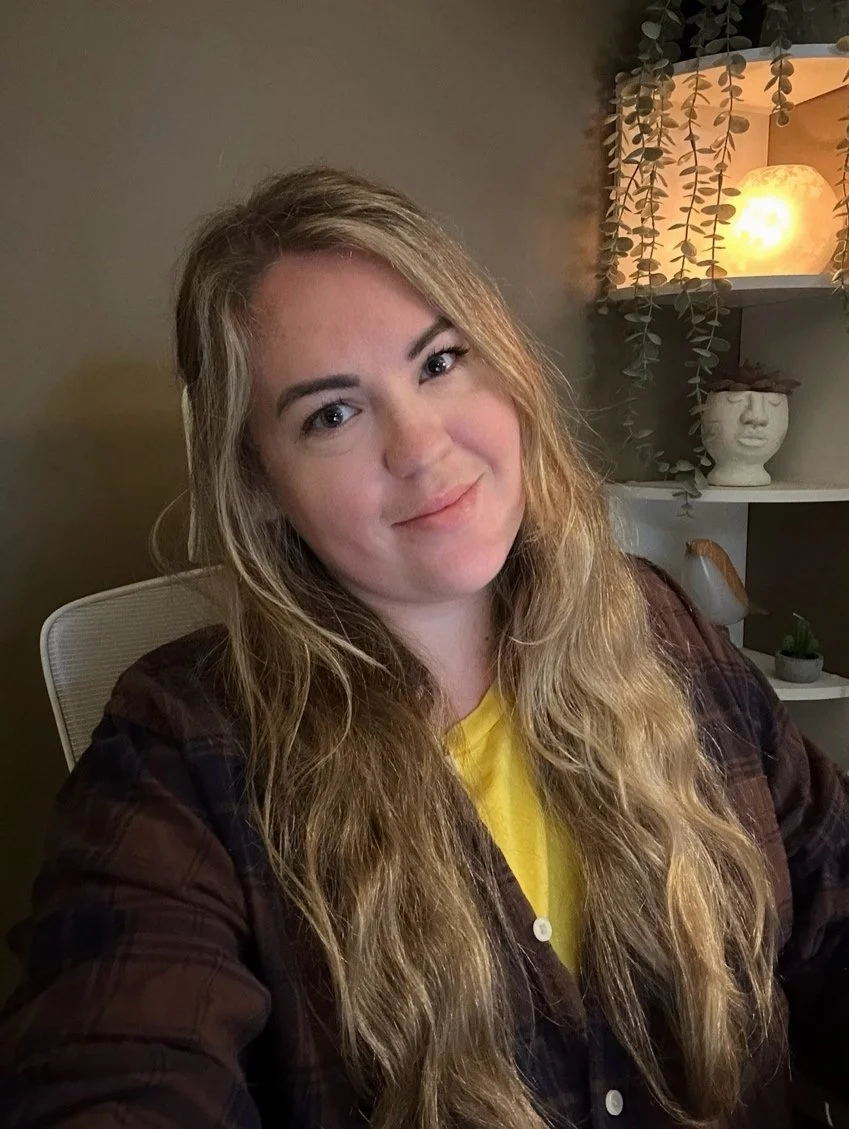
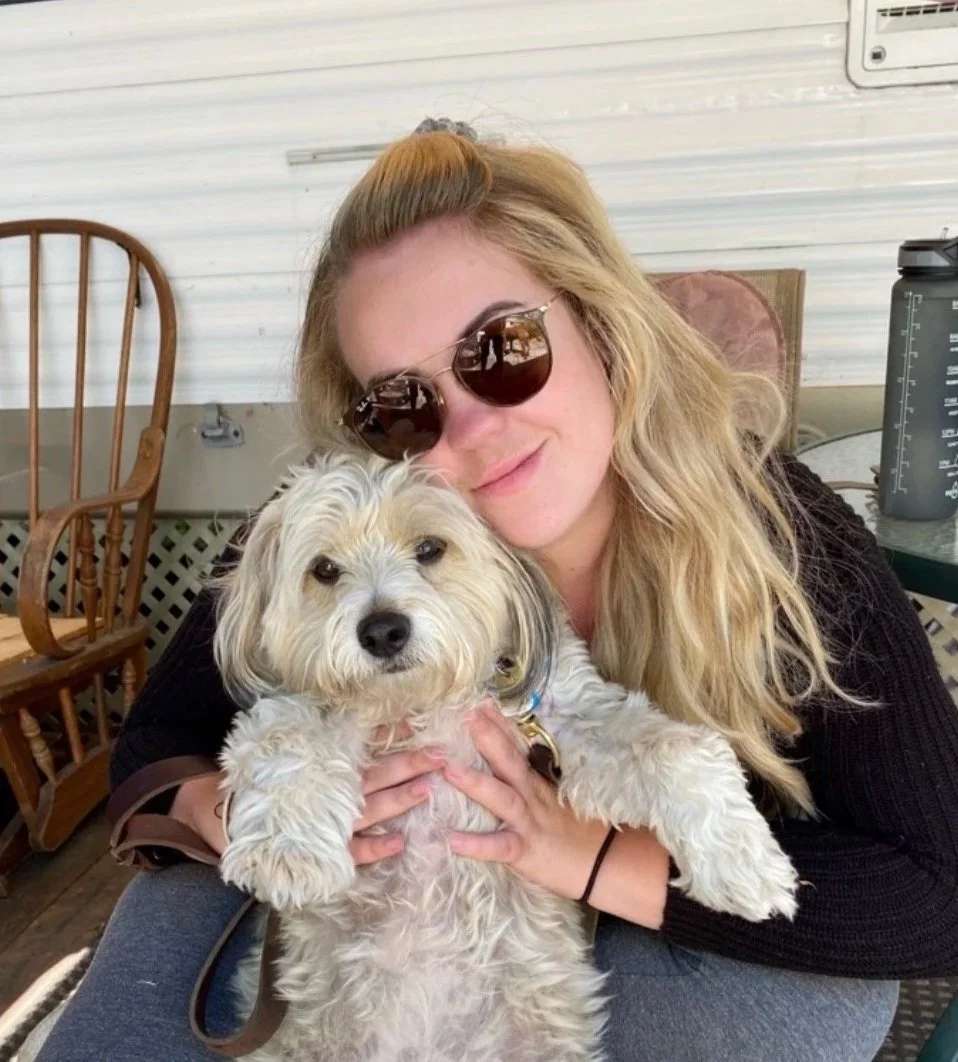
My path into this work has not been linear, but it has always been rooted in a deep respect for people’s lived experiences and a belief that support should be compassionate, accessible, and human.
Over the past decade, I have worked across schools, treatment centres, social services, and medical settings. These experiences shaped my understanding that emotional well-being is influenced not only by individual experiences, but also by relationships, environments, and access to care.
Early in my career, I was drawn to working with children and youth. That work gave me a lasting understanding of how early emotional environments, especially those marked by stress, inconsistency, or unmet needs, can shape how we relate to ourselves and others later in life. Today, that foundation continues to inform my work with adults.
