Emotional Awareness— October Reflections

Noticing, Naming, and Understanding Emotions in October
Expectations vs. Reality
October often carries an expectation of settling in. Routines feel more established, schedules are fuller, and there can be a sense that we should be more emotionally regulated or “back to normal” by now. With fall fully underway, there is sometimes pressure to push through, stay productive, and manage emotions quietly.
In reality, October can bring emotional intensity. Shorter days, changing light, and accumulating responsibilities can stir feelings that are harder to ignore. Some people notice increased irritability, low mood, anxiety, or emotional fatigue. Others feel more reflective or sensitive than expected. When emotions feel stronger or less predictable, it can be tempting to judge ourselves rather than listen to what those feelings might be signalling.
From a therapeutic perspective, October is often less about fixing emotions and more about noticing and understanding them with curiosity and care.

Therapy in Practice
In October, I often see clients becoming more aware of their emotional patterns. Parents may notice heightened emotions in themselves or their children as routines intensify. Couples sometimes experience more friction as stress accumulates and communication feels strained. Individuals may become more aware of emotions they have been postponing since the busyness of summer.
A common theme in therapy this month is learning to slow down emotional reactions rather than suppress them. Many clients are practising how to name what they are feeling, understand what triggered it, and respond with intention instead of urgency. Therapy during October often focuses on emotional awareness as a foundation for regulation, connection, and self-compassion.

Personal Reflections
October often invites me to slow my own pace and pay closer attention to emotional cues. As days grow shorter and quieter, I notice how emotions surface more clearly when there is less distraction. It has been a reminder that it is okay to feel something without knowing exactly what to do with it yet.
This month has highlighted the value of pausing before responding. I have been noticing how brief moments of grounding, such as stepping away from stimulation or checking in with my body, can create space to respond more intentionally. These small pauses often feel supportive, especially during emotionally fuller seasons.
Over time, I have come to understand how many of us were never explicitly taught how to relate to our emotions in calm, supportive ways. Learning this has helped me approach emotional experiences with more patience and less self-judgement, particularly when anxiety, low mood, or stress make emotions feel more intense or reactive.
Developing a clearer understanding of emotions has supported greater steadiness and perspective in my own life. When trauma is present, emotions are often experienced not only in thoughts, but through physical sensations or automatic responses. Practices such as mindfulness have helped me notice these patterns with curiosity, offering gentle support for regulation over time.
Ideas to Try This Month
As October unfolds, this can be a supportive time to turn your attention inward with curiosity rather than judgment. You might gently explore:
Noticing emotions without needing to change them
Naming what you are feeling with simple language
Pausing before responding during moments of stress
Checking in with your body when emotions feel strong
Offering yourself the same compassion you would offer someone else
Emotional awareness often begins with noticing, not doing. These small practices can help build understanding and steadiness over time, without pressure to manage emotions perfectly.

Small Steps Forward
In October, small steps forward often begin with naming what is being felt. Many people were never taught how to identify emotions beyond broad labels like stressed, fine, or overwhelmed. Developing emotional awareness is a skill, not a personality trait.
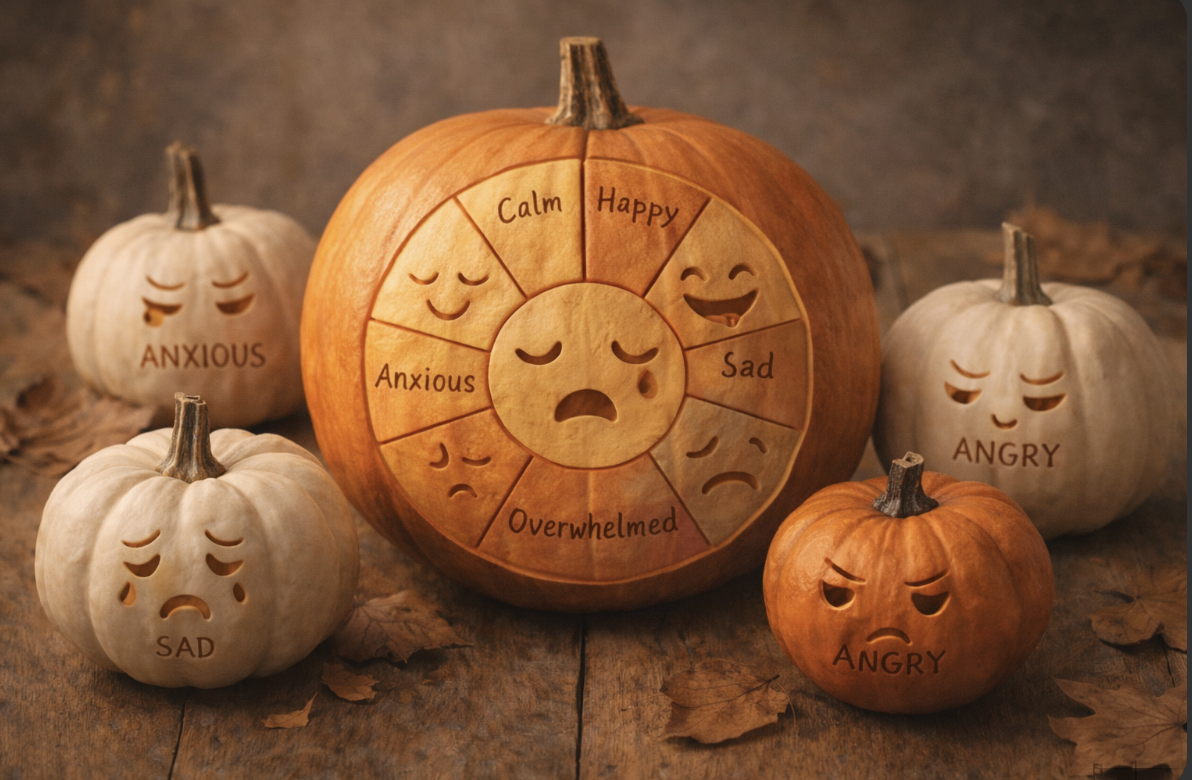
A small step this month might be pausing to ask yourself, What am I actually feeling right now? Tools such as an emotions wheel can help expand emotional language and make inner experiences easier to understand. Noticing where emotions show up in the body or what tends to trigger them can also offer valuable insight.
Progress does not require managing emotions perfectly. It begins with awareness and curiosity. Therapy can support this process by helping you build emotional literacy, slow reactivity, and respond to emotions with greater intention and compassion.
— Joe-Ann Marie Watkins, Registered Psychotherapist
Date: October 1, 2026
Watkins Counselling & Wellness — Helping You Reconnect, Heal, and Grow